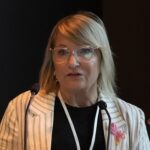
Celcila Olssen's Vision for Integrated Breast Cancer Care: From Survivor to Advocate
Celcila Olssen is a breast cancer survivor, patient advocate, and Innovation Manager at GE Healthcare. Her journey took a profound turn in 2015 when she was diagnosed with invasive lobular breast cancer. Since recovering, she has dedicated her career to transforming the healthcare ecosystem, ensuring that technology serves the patient rather than complicating their journey. As a Swedish national who lives in France, she brings a unique global perspective to women's health, having been treated herself in French hospitals. Her presence at recent conferences was not merely as a product representative, but as a voice from the "other side" of the patient experience, aiming to debunk myths and drive meaningful change.
The Hidden Cost of Fragmented Care
Olssen highlights a stark reality often overlooked in traditional care pathways: the sheer volume of appointments required for invasive lobular cancer. During her five-year journey, she attended approximately 350 appointments and traveled over 3,000 kilometers between scattered centers. This fragmentation creates a significant carbon footprint and, more importantly, immense emotional strain for patients. She notes that even with free mobile screening initiatives, up to 50% of women in France still fail to attend, often due to fear, confusion, or logistical barriers.
Optimizing the Diagnostic Workflow
To address these challenges, Olssen advocates for a shift toward "one-stop" concepts that consolidate diagnostics, biopsies, and interventions into a single visit. By equipping diagnostic units with interventional capabilities, hospitals can eliminate the need for patients to return home and come back for a biopsy, reducing waiting times from weeks to days or even hours. She emphasizes that acquisition decisions by radiology departments directly influence these care paths. Furthermore, she argues that patient navigation tools and proactive education are essential to lower pain thresholds and alleviate the anxiety that prevents women from seeking care.
Healing Through Art and Community
Beyond clinical efficiency, Olssen champions the role of art in healing. She shares her personal collection, created to express the inner fears and anxieties of being alone during treatment. Her work at Gustave Roussy, a leading cancer center in Villejuif, France, demonstrates how integrating art into hospital environments can foster a healing culture. She believes that addressing the psychological needs of patients is just as critical as technological innovation.
A Call to Action for Radiologists
Ultimately, Olssen urges the radiology community to become catalysts for change. By prioritizing patient problems over institutional ones, healthcare providers can unlock true innovation. Her message is clear: to save women from the healthcare system, we must redesign workflows, invest in navigation, and embrace a culture of empathy that extends from the reception desk to the treatment room.